About Pfeiffer Big Sur State Park
Pfeiffer Big Sur State Park began in 1933, when homesteader John Pfeiffer sold 680 acres along the Big Sur River to the State of California instead of to a developer who wanted to build a subdivision. Today California State Parks runs it as a redwood river park with Big Sur's largest campground, a hotel and about 750,000 visitors a year.
The Park in Brief
The First People
Archaeological evidence puts the Esselen and Rumsien people, also called Costanoan, on the Central Coast about 8,000 years ago. Projectile points, bedrock mortars and shells found in the area have been attributed to them. Esselen and Rumsien people still live in the Big Sur area and practice their ancestors' traditions.
Rancho Days and the Homesteaders
In 1834 Governor José Figueroa granted land to Juan Bautista Alvarado. His El Sur Rancho ran from today's Carmel Valley to below the Big Sur River. California passed from Mexico to the United States in 1848, and from about 1862 settlers moved in whose names are still on local roads and businesses: Pfeiffer, Partington, Post and Gamboa.
Manuel Peak, the mountain above the park, is named for Immanuel Innocente, a Chumash man who was head cattle wrangler at El Sur Rancho. In 1868 he moved his family north from San Buenaventura and bought land along the river in what is now the park.
Michael and Barbara Pfeiffer arrived in 1869 and settled at the mouth of Sycamore Canyon, where they ranched, farmed and kept bees. Their son John lived along the Big Sur River, near the site of the Homestead cabin. When a developer offered to buy his land for a subdivision, John Pfeiffer said no and sold 680 acres to the state in 1933. That land is the core of the park.
The Civilian Conservation Corps
The park's first buildings came from the Great Depression. Men of Civilian Conservation Corps Camp S.P. 12 built the campground, buildings, fences, a footbridge and trails here. They worked in the "park rustic" style, with redwood lumber and stones from the river, and between jobs they fought fires and poison oak. Highway 1 was finished in 1937, and after World War II it brought a growing stream of travelers to the park.
Fire and Recovery
Fire has shaped the park's recent history:
- 2008: the lightning-caused Basin Complex Fire burned 162,818 acres along the Big Sur coast and ruined the Pfeiffer Falls Trail.
- 2017 to 2021: Save the Redwoods League and State Parks rebuilt that trail with a new 70-foot footbridge.
- 2026: the Timber Fire burned about 517 acres inside the park from August 8. The park served as base camp for the fire crews and reopened to visitors on October 16, 2026, with several trails still closed (what's open).
The Park Today
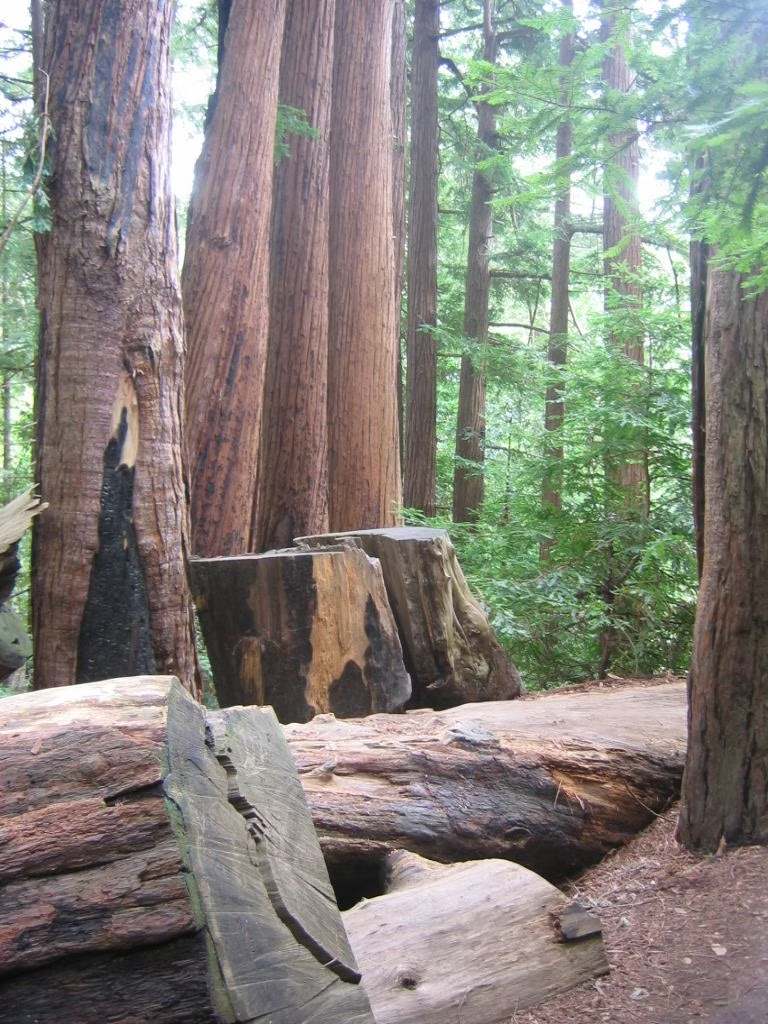
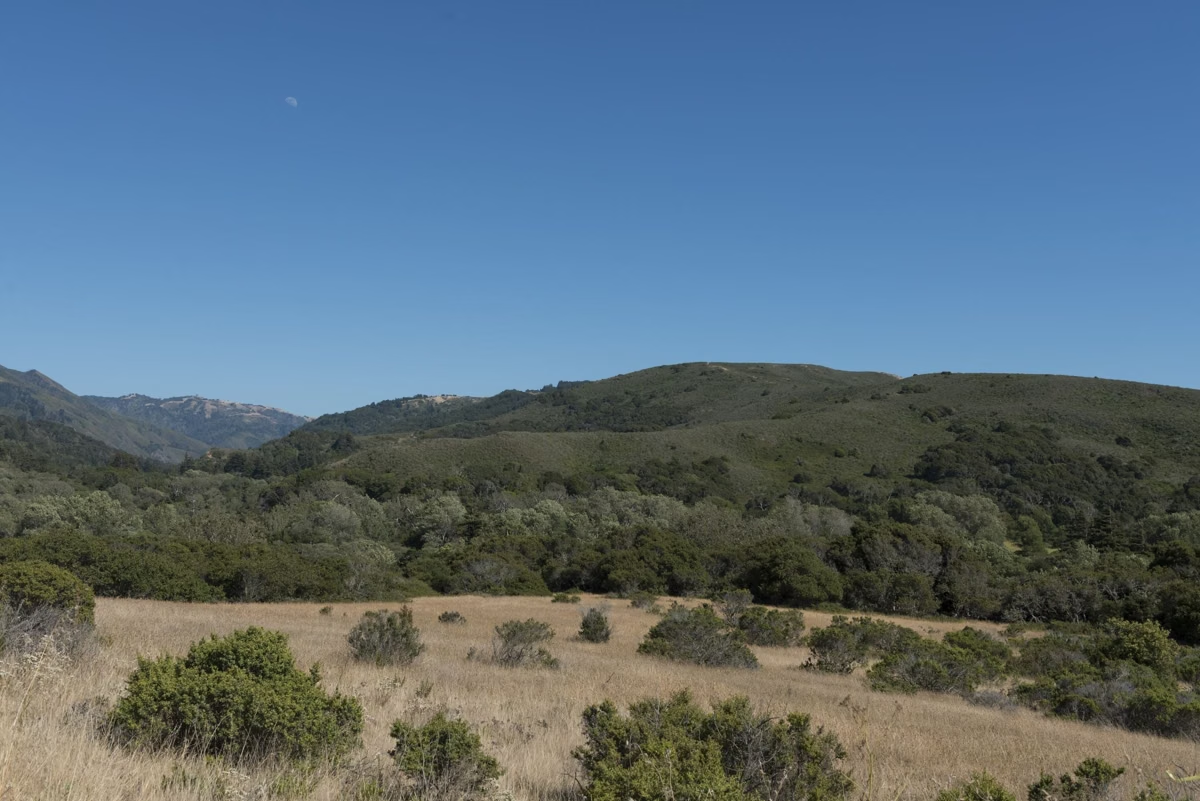
Pfeiffer Big Sur sits on the western slope of the Santa Lucia Mountains, where the Big Sur River leaves its gorge and winds through redwoods, sycamores, maples, alders and willows. There is no ocean access inside the park. Its 189-site campground, the Big Sur Lodge, picnic areas on the river and the Ewoldsen Nature Center make it a base for the whole Big Sur coast. The Big Sur Natural History Association supports the park.
Neighbors on Highway 1: Andrew Molera State Park is 4 miles north and Julia Pfeiffer Burns State Park 11 miles south. Pfeiffer Beach, a mile south, is a Forest Service site, not part of this park.
About Pfeiffer Big Sur State Park FAQ
Who was Pfeiffer Big Sur State Park named after?
The Pfeiffer family, who settled here in 1869. Their son John Pfeiffer turned down a developer and sold 680 acres along the Big Sur River to the State of California in 1933, which became the core of the park.
When did Pfeiffer Big Sur become a state park?
In 1933, when John Pfeiffer sold 680 acres to the State of California. That same year a Civilian Conservation Corps camp began building the park's campground, buildings and trails, work that went on until 1942.
What is the difference between Julia Pfeiffer Burns State Park and Pfeiffer Big Sur State Park?
They are two separate state parks 11 miles apart. Pfeiffer Big Sur is the inland redwood and river park with the big campground and lodge. Julia Pfeiffer Burns is farther south on Highway 1. Both are run by California State Parks and share the $10 same-day pass.
Is Pfeiffer Big Sur State Park worth visiting?
If you want redwoods, a river to cool off in and a base for the Big Sur coast, yes. Expect closures: after the 2026 Timber Fire, Pfeiffer Falls and the long trails are shut, while the river, redwood grove, Buzzards Roost and the campground are open.
An independent visitor guide to Pfeiffer Big Sur State Park, not run by or affiliated with the California Department of Parks and Recreation (California State Parks). Facts are checked against the California State Parks page for Pfeiffer Big Sur State Park (last on November 23, 2026); where this site and the agency differ, the agency is right. How this site works.
Facts checked against the California State Parks page for Pfeiffer Big Sur State Park on November 23, 2026.